
Your First Week Game Plan for a Smooth Semester
Starting a new semester brings a lot of emotions. New classes can be daunting, maybe you have a larger course load than you are used to, etc.
But there are very simple things you can do in the first week of the semester so that you start on a good foot.
Syllabus week is not just for figuring out what building/rooms your classes are in and being “present”, it is also a great opportunity for getting your semester materials organized and getting connected. These are some actionable things you can do to be ahead.
Time Block your Classes
Now lets kick this off with one of my favorite student organization tips: Time Blocking!
Grab your favorite calendar tool – whether that’s Google Calendar, a planner or a simple notebook – and time block your classes. This will instantly show you what free time you have each week outside of class.
You will use this as your starting base for the next steps. So make sure this tool is easily accessible for you no matter where you are.
If you want to see another post about how time blocking helped me stay productive, go here: Tips to Keep A Productive Mindset
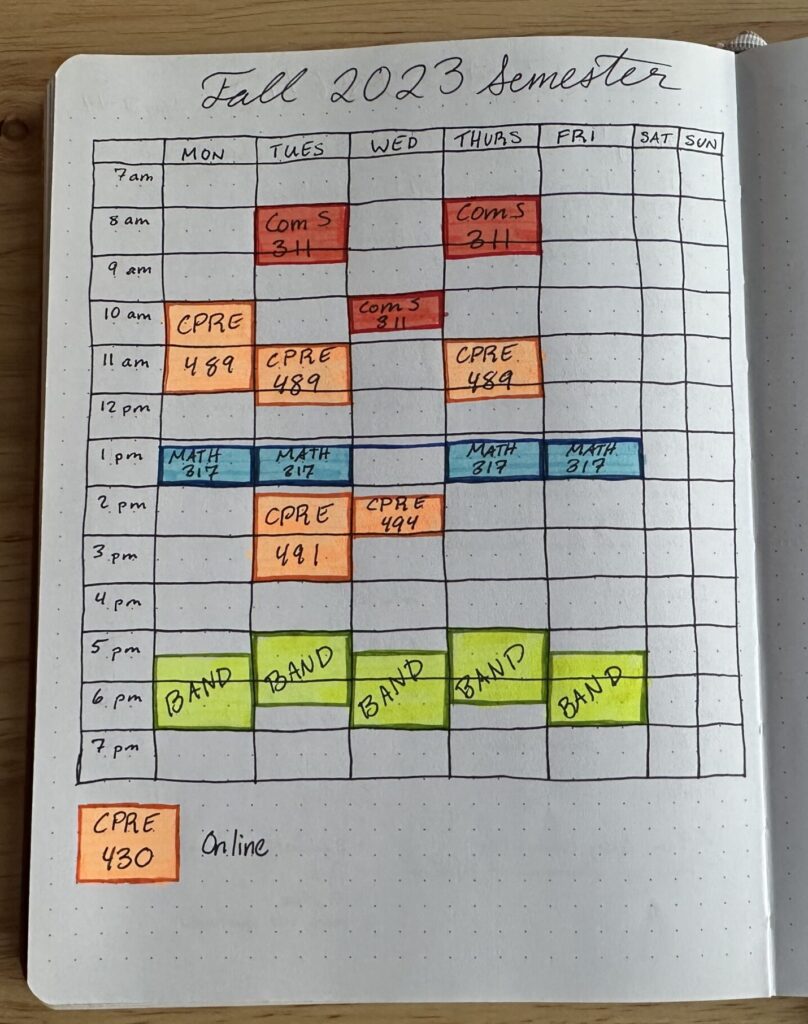
So much information is calendar based so get used to using this a lot. I highly recommend using the same calendar tool for all of this information so that you only need to check one place to find what you are looking for. I have used both analog and digital versions of time keeping tools. My favorite to use to this day is Google Calendar since you can get notifications on your phone and it is easily personalizable.
Read the Syllabus
A lot of the things you should do in your first week of the semester will come back to one easy step: Reading your syllabus!!!!
I know that sounds like such a drag, but simply reading the syllabus for each class already sets you up for understanding what to expect in your class. Some professors will even put together syllabus quizzes to “convince” students to read them because so many people skip out on this step. Do yourself a favor: the second you can get your hands on the syllabus, READ IT!
There is so much information that your professors put together for you in the syllabus.
Some examples of the info you can find are:
- Exam dates
- Project deadlines
- Assignment due dates
- Grading scale
- Required vs optional readings
- Attendance or late work policies (make sure you understand this one to a T)
- Professor’s office hours
- TA office hours (if you have them)
Like I said, lots of info!
Now grab your favorite timekeeping tool, and mark down all the dates and deadlines you can get your hands on. I highly recommend color coding or using some other distinction so that you know which deadlines are for which classes. This will help you stay on track as the semester moves along and you can shift dates around as they change but you at least get to start with a good outline so you’ll have a good pace to follow.
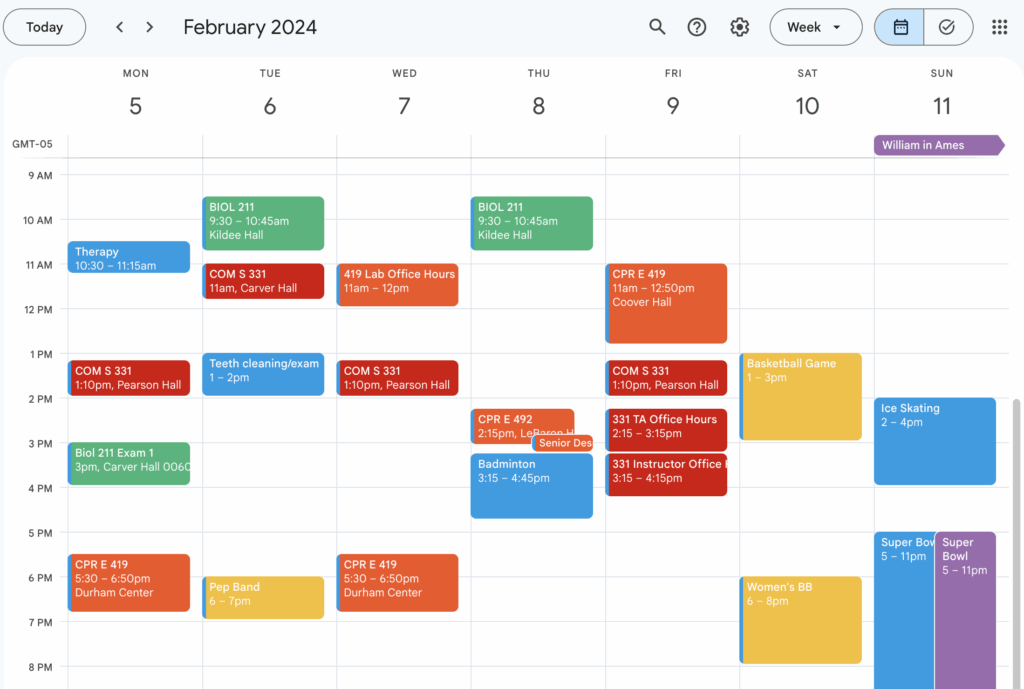
Still on the topic of organizing important dates, look back at those office hours. Mark these hours in your calendar so you easily know when your professor is available for any questions you have. The image above is a good example.
Don’t Forget Meals
Before we leave the calendar to go back in your bag, take a look at the time you have between classes. Try to figure out where you can set time to eat meals or snacks. Trust me, you do NOT want to be sitting in a warm lecture hall with your stomach grumbling while you try (and ultimately fail) to pay attention to the professor.
Nobody focuses well on an empty stomach (and no one wants to be hangry in lecture). Looking ahead at your schedule can help give you an idea of whether you might need to bring lunch with you or if you have time to go home/back to the dining hall. And even then, maybe it’s less than 20 minutes and you really only have time for a snack after walking between buildings.

Either way, now you can set yourself up for success (and better energy) to plan for each day.
Besides, your brain needs a break between classes, so grab a meal, or a snack, and sit for a moment before running into your next class.
Now keep in mind, snacks from Starbucks add up fast if you’re getting them everyday. Try getting a box of granola bars and bringing one each day. That will be way more cost effective.
If you have campus cash through dining plans or something I once knew as “dining dollars”, those can be used on campus and generally don’t roll over to the next semester. I know a couple people that worked out a way to pace themselves on spending those dollars and only had a few cents by the last day of the semester.
Get Connected with Professors
Building connections in college is a daunting task but a necessary one. If you are the kind of person looking for research opportunities, becoming a TA, completing a Masters or PHD after your undergrad, or even just trying to build your network, you will NEED to build relationships.

It is very easy to set yourself apart simply by introducing yourself to your professor. Giving them an in-person impression of you versus just your assignments and your picture through the school will help humanize you. And it will help humanize your professor! (And humanize you rather than being another name on a paper.)
Especially for big class sizes, your professor will struggle to learn your name otherwise if you don’t build a connection with them. Building good relationships can help with getting recommendations or even job opportunities in the future. Do yourself a favor and open the door to the opportunity before you start kicking yourself in 4 years wishing you had gotten to know your professors better.
There is no reason to feel intimidated by a professor on the first day. Feel free to prove me wrong. They are there to teach you what they know and be a resource for you. Most professors are masters in the subjects they teach and there is no limit to the amount of life experience and knowledge they can share with you.
Now, your professors aren’t the only ones to build connections with…
Get Connected with Classmates
You should also try to get to know at least 4 other people in your class. Think ahead to working on homework assignments or studying for a test. I promise, if you can create a study group early on in the semester and work together, you will have a much easier time preparing for any assessments.
There are plenty of times in the real world where you are going to have to work with other people that have different perspectives. It is much better to build the communications skills required for group work now. And there's a good chance that other people can help you answer any questions you have about homework or study questions simply because they interpreted it differently than you.

Thinking outside the box and looking at things from a different angle are skills you will gain faster through working with classmates that are at a similar level to you. I swear, it was not funny the number of times where I had a classmate explain something to me in a different way from the professor and it all of a sudden made sense.
Not everyone learns the same way and your shortcut is to turn to people sitting near you, say hi, exchange numbers, emails, discord, slack, or snapchat, and work together. And hey, maybe you’ll make a friend (or a few) along the way!
Now with all that said, I hope you all have a wonderful start to your semester!
TTFN